
Find Lee County Police Records
Lee County police records are maintained by the Sheriff's Office and local police departments in Sanford, North Carolina. The sheriff handles arrest reports, incident files, and booking records for the county. Lee County also has the Sanford Police Department and Broadway Police Department, each managing their own police records. You can search for records by contacting the right agency based on where the incident occurred. This guide covers how to request and find police records throughout Lee County.
Lee County Quick Facts
Lee County Sheriff's Office Records
The Lee County Sheriff's Office is located at 1401 Elm Street in Sanford. Sheriff Brian Estes leads the office. The main phone number is (919) 718-4561, and the fax is (919) 718-4564. For emergencies or after-hours calls, dial 919-775-5531. The Lee County Sheriff's contact page provides full details for reaching each division.
Police records from the Lee County Sheriff's Office include arrest reports, incident reports, and booking logs from the county jail. The records division handles background checks and processes requests for copies of reports. Visit during business hours with a valid photo ID to search or request police records. You can also submit a written request by mail to P.O. Box 4567, Sanford, NC 27331-4567.
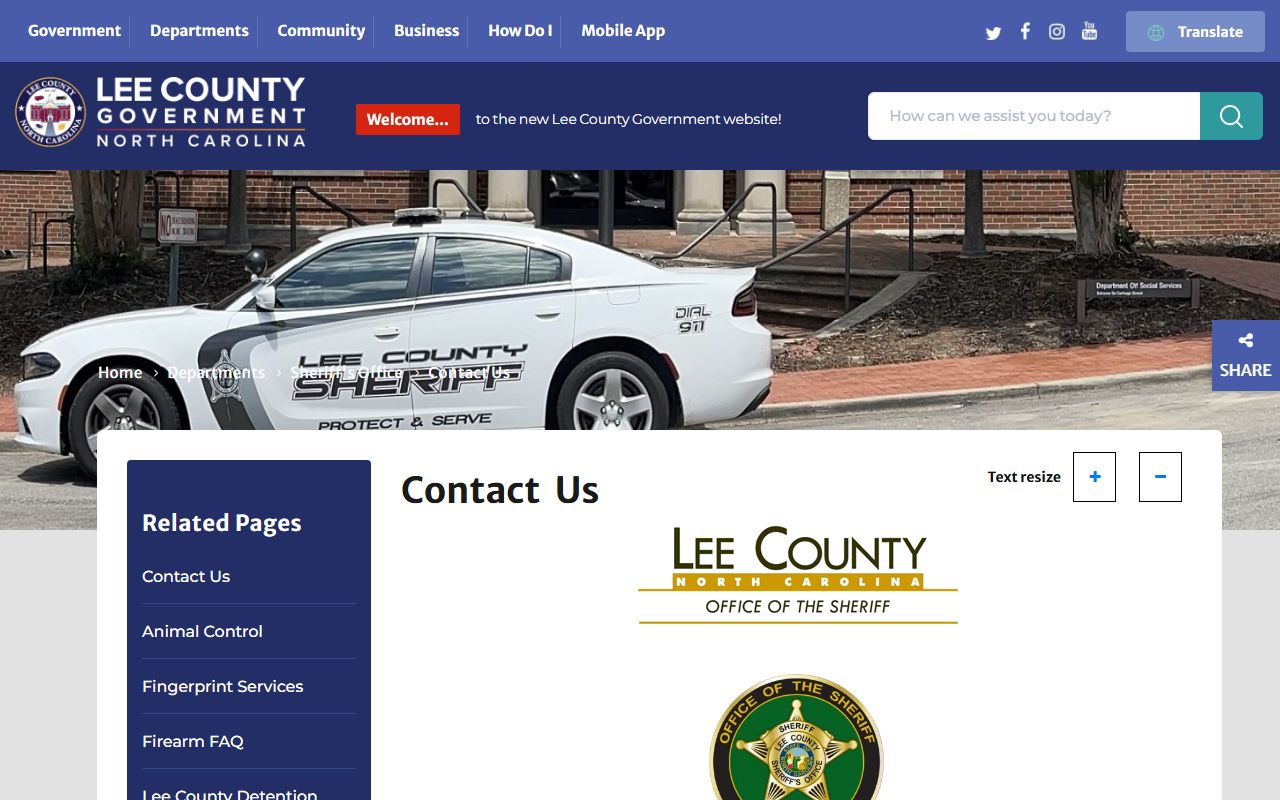
The contact page above shows phone numbers and office details for the Lee County Sheriff's Office where police records are stored.
Lee County Local Police Departments
Two municipal police departments operate within Lee County. Each keeps its own police records for incidents in their jurisdiction. If an arrest happened inside city limits, you may need to contact that city's police department.
The Sanford Police Department is at 225 E Weatherspoon Street in Sanford. Call (919) 775-8346 to reach them. The Broadway Police Department operates from P.O. Box 130, Broadway, NC 27505, and can be reached at (919) 258-9232. Both departments create arrest reports and incident files for their areas within Lee County. Contact the agency that handled the case to request copies of police records.
Note: The sheriff's office covers all areas outside city limits in Lee County.
Lee County Jail and Booking Records
The Lee County jail can be reached at (919) 718-4567. All arrests in the county go through booking at this facility. Each booking creates police records that include the person's name, charges, date of arrest, bond amount, and mugshot. These records are public under North Carolina law.
To check if someone is held at the Lee County jail, call the jail line directly. Provide the person's full name and date of birth. Staff can confirm custody status and provide basic booking details over the phone. For copies of booking records or mugshots, visit the sheriff's office during business hours. Some requests may involve a small fee for copies of police records from Lee County.
The county also accepts anonymous crime tips through the sheriff's office website. This is for reporting crime, not for requesting police records. Tips go to investigators, not the records division.
North Carolina Records Law in Lee County
Police records in Lee County are governed by N.C.G.S. Chapter 132, the North Carolina Public Records Act. This law gives the public the right to inspect government records during normal business hours at no cost. Copies come with a fee set by state rules. The Lee County Sheriff's Office follows these guidelines.
Not all records are open. Active criminal investigations may be withheld under N.C.G.S. § 132-1.4. Juvenile records are sealed. Body camera and dash camera recordings require special procedures under N.C.G.S. § 132-1.4A. For standard arrest reports and closed incident files, access is available to anyone in Lee County. The public portions of every police record always include the date, time, and location of the incident, plus the name and age of any arrested person.
Note: Expunged records will not appear in search results from Lee County agencies.
Lee County Court Records Search
The Lee County Clerk of Superior Court manages court case files from the Lee County Government Center in Sanford. You can search court records through the NC Courts website or visit the clerk in person. Court records show case filings, hearing dates, dispositions, and sentences. These are separate from the police records held by the sheriff.
Court records track what happens after charges are filed. Police records cover the arrest and investigation. Both are public. If you need both types, contact the sheriff's office for police records and the clerk for court records. Bring a case number or the person's name to speed up your search in Lee County.
For statewide criminal searches, use the NC Department of Adult Correction offender search tool. This covers state prison inmates and supervised offenders but not local jail records from Lee County. The NC Sex Offender Registry at sexoffender.ncsbi.gov lets you search by county, name, or zip code for registered offenders in Lee County.
How to Request Lee County Records
Start by figuring out which agency handled the case. If the arrest was in Sanford, contact the Sanford Police Department. If it was outside city limits, call the Lee County Sheriff's Office. Each agency keeps its own set of police records.
For the sheriff's office, call (919) 718-4561 or visit 1401 Elm Street in Sanford. Bring your photo ID and the details of the record you want. For mail requests, send a letter to P.O. Box 4567, Sanford, NC 27331-4567. Include the person's full name, date of birth, the date of the incident, and your contact details. Most requests are filled within a few business days. Older police records from Lee County may take longer to find in the archives.
- Call (919) 718-4561 for the sheriff's office
- Visit 1401 Elm Street in Sanford
- Contact Sanford PD at (919) 775-8346
- Search the NC Courts portal for court case files
- Check the NC offender search for state records
Nearby Counties
These counties are near Lee County. If you are unsure which county handled an arrest, check the address where it took place. Police records are kept in the county where the event occurred.